What we do
Research
We measure and model how cells in our tissues accumulate mutations, compete and are selected, the Darwinian evolutionary process at the heart of cancer. We turn sequencing data into a quantitative picture of this process, from normal tissues through the earliest lesions to metastasis and drug resistance. Our projects span three central themes.
Non-invasive tracking of evolutionary dynamics
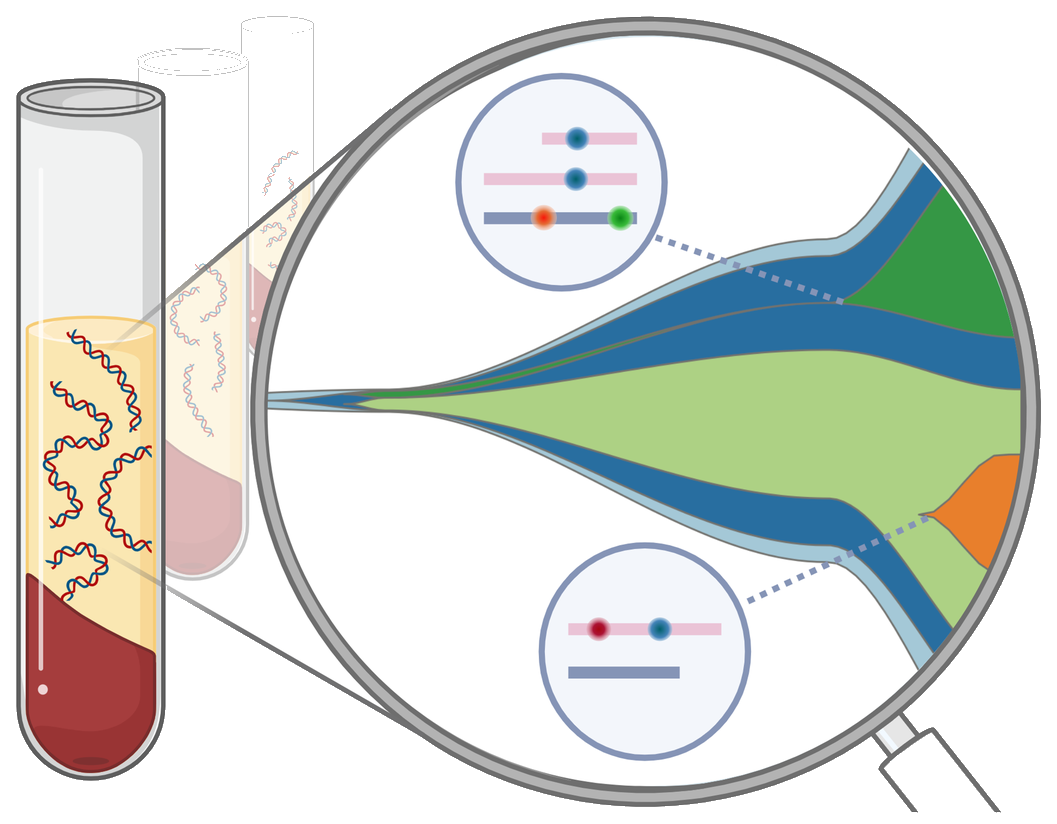
Most of what is known about cancer evolution comes from single snapshots of disease. We track evolution longitudinally, over many years, using non-invasive samples that can be collected readily and repeatedly from patients or healthy participants. For example, we have used circulating tumour DNA (ctDNA) from the blood plasma of lung cancer patients to track clones as they rise and fall in response to treatment, in the TRACERx and DARWIN II studies with Prof Charles Swanton and Dr Crispin Hiley. This revealed immune-related determinants of clone-specific therapy responses. Alongside plasma, we are applying our approaches to several other non-invasive sample types, drawing on methods we have recently developed to make these measurements with ever greater accuracy and across a wider range of clinical contexts.
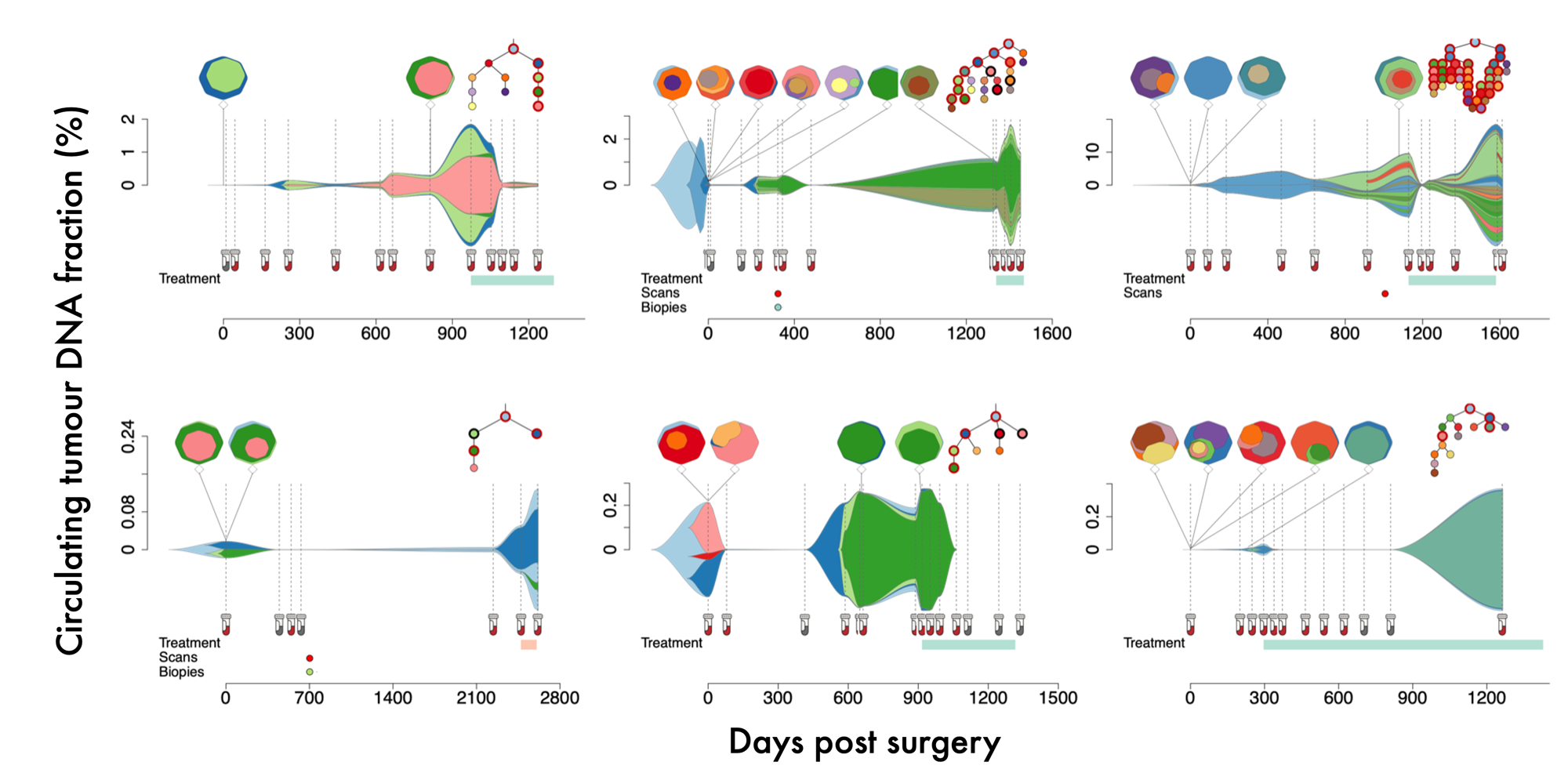
Somatic selection pressures from spatial, single-cell WGS + RNA co-sequencing
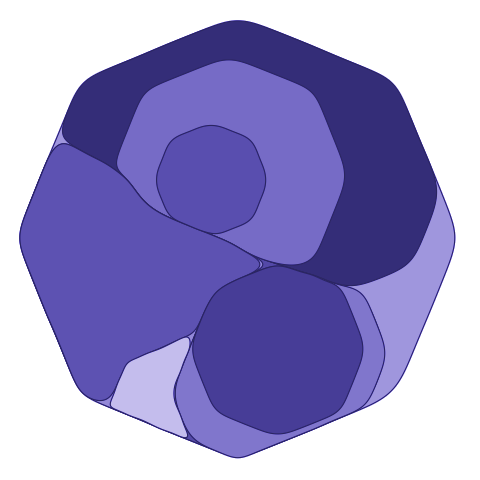
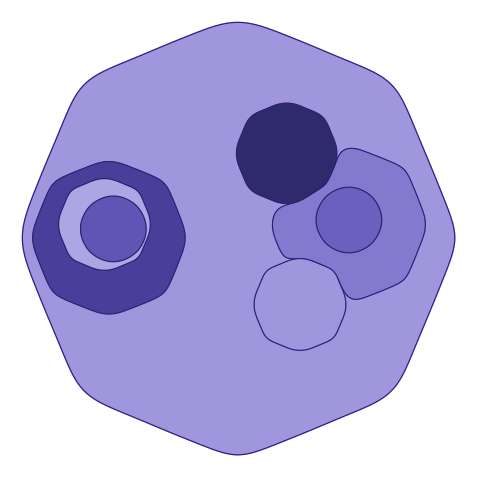
Understanding what drives cellular evolutionary dynamics is essential for designing effective interventions, above all preventive therapies. Both intrinsic and extrinsic influences shape somatic evolution, just as they do for individuals of a species in an ecological habitat. We are developing spatial co-DNA and RNA sequencing approaches to define somatic clones within tissues alongside their microenvironment and architecture, and to identify the forces driving positive and negative selection from cancer initiation through to drug resistance.
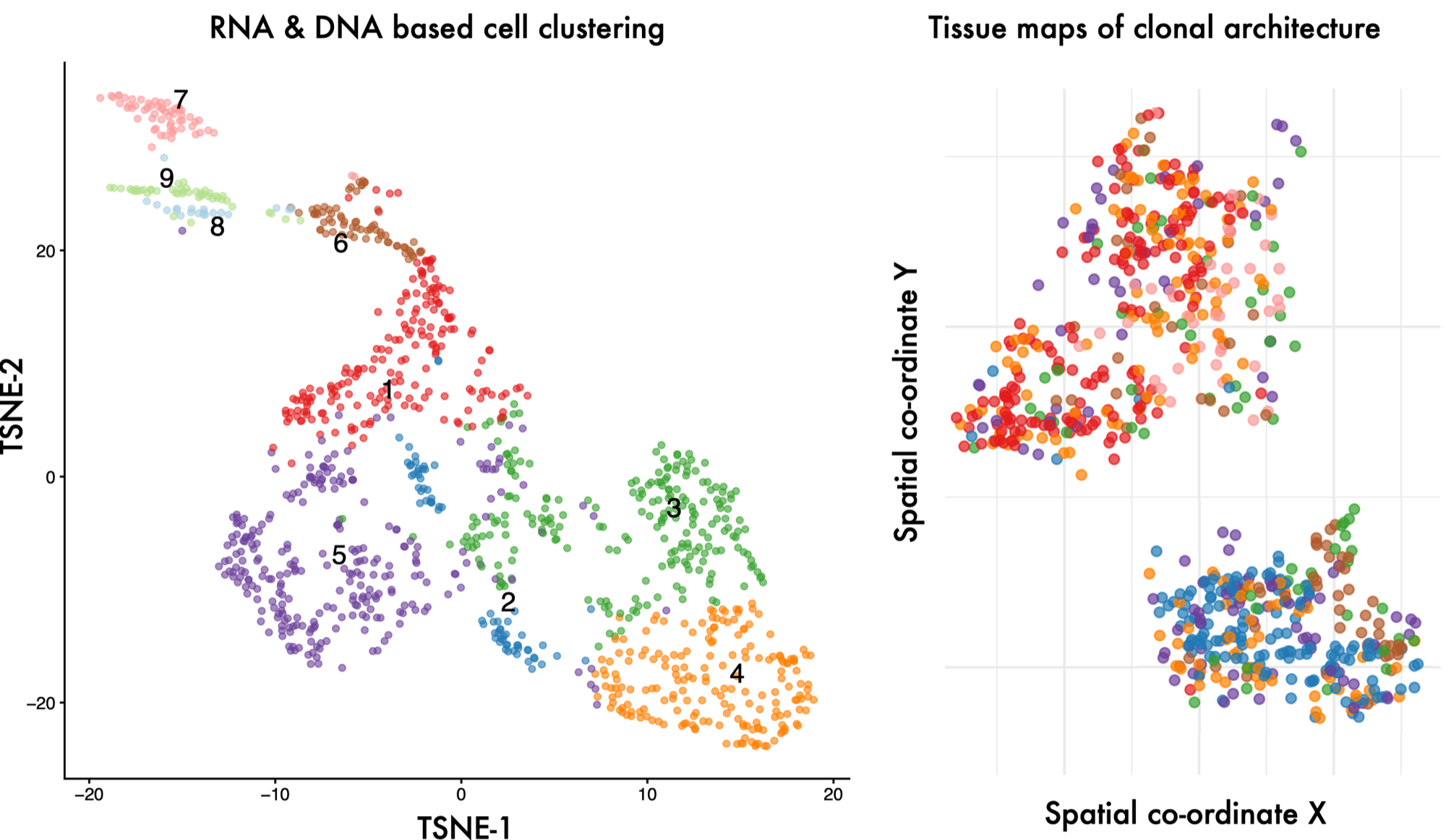
Evolutionary biomarkers for the clinic
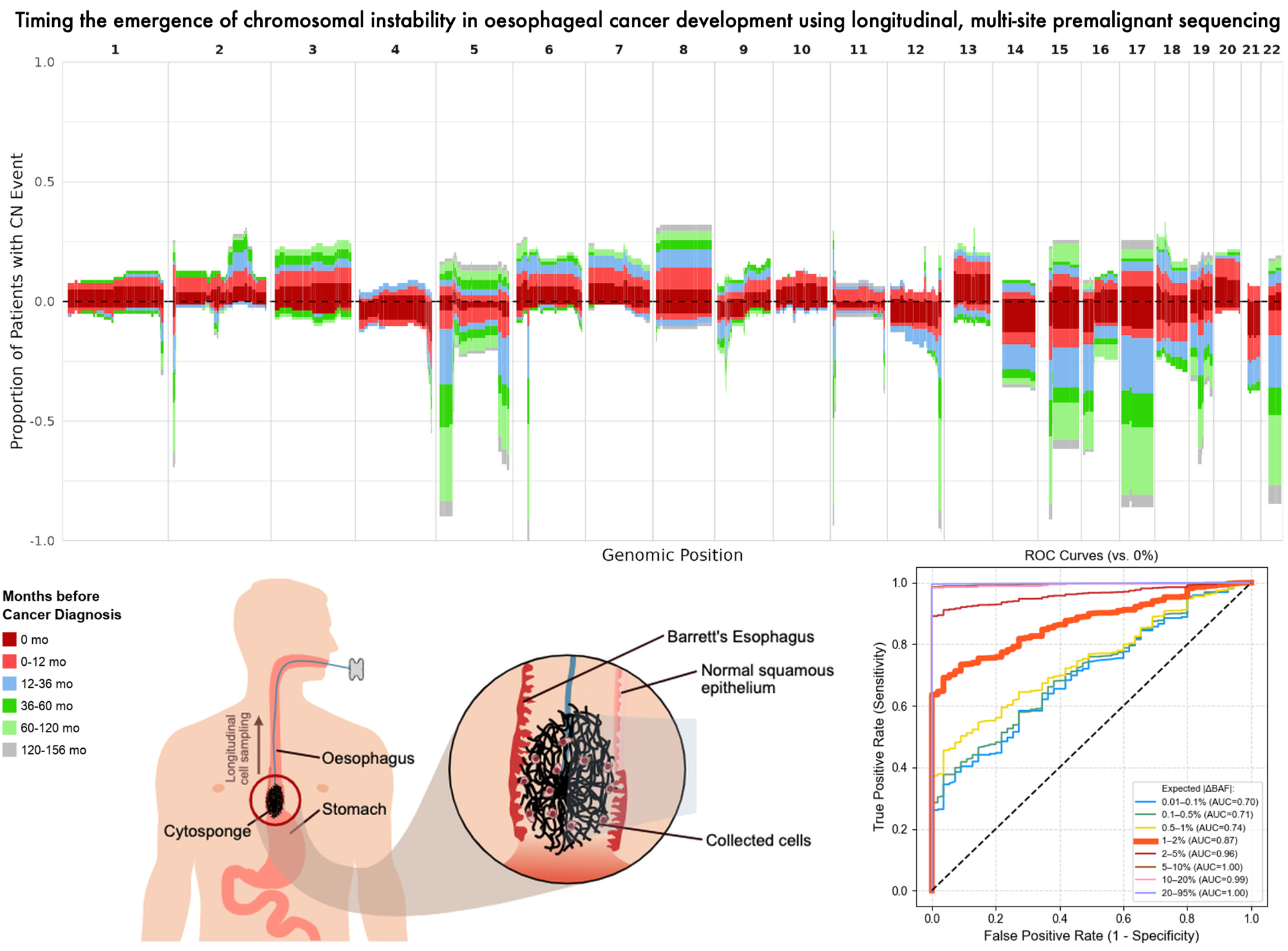
Our focus on extracting new understanding from samples collected in the clinic leads naturally to translational applications. Non-invasive, low-morbidity sampling is ideally suited to screening healthy or at-risk populations to predict future cancer development or detect undiagnosed disease, but these sample types are typically highly impure and demand new technologies to extract clinically meaningful signal. We develop these biomarkers in partnership with our clinical collaborators and industry, for example in the BEST4 study of oesophageal premalignancy using the capsule sponge device, with Prof Rebecca Fitzgerald and Cyted.